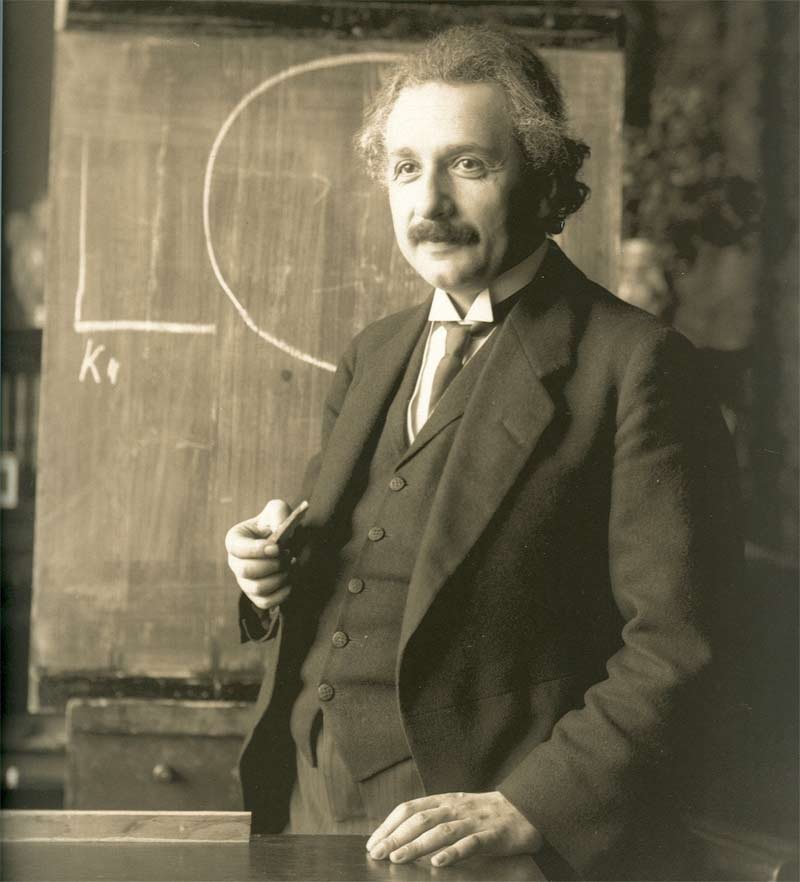
Science has shaped our understanding of the universe, from the tiniest particles to the vast cosmos. The greatest scientists didn’t just discover facts—they rewrote how we see reality. This article dives into the lives and legacies of ten scientific giants whose work transformed humanity. Their stories blend brilliance, grit, and moments of serendipity, making science feel as human as it is groundbreaking. Let’s explore their contributions, why they matter, and how you can dive deeper into their world.
Why Celebrate the Greatest Scientists?
Recognizing these scientists isn’t just about honoring their discoveries—it’s about understanding how their curiosity and persistence pushed humanity forward. Their work laid the foundation for modern technology, medicine, and our grasp of nature. From unraveling gravity to decoding DNA, their legacies inspire students, researchers, and dreamers alike.
The Impact of Scientific Discovery
Every major breakthrough, from electricity to antibiotics, traces back to a scientist who dared to ask “why?” Their discoveries solved practical problems and opened new fields of study, creating ripples that still shape our lives today. Imagine a world without GPS, vaccines, or computers—none of these would exist without their bold ideas.
Criteria for Choosing the Top 10
Selecting the greatest scientists isn’t easy—science is vast, and contributions vary across eras and fields. We focused on impact, innovation, and lasting legacy. These scientists revolutionized their disciplines, influenced society, and inspired future generations. Their work spans physics, biology, chemistry, and more, ensuring a diverse list.
How We Defined “Greatness”
Greatness here means transformative ideas that reshaped science or society. We considered Nobel Prize wins, paradigm-shifting discoveries, and cultural impact. Personal stories of struggle or triumph also add depth, showing the human side of genius.
1. Isaac Newton (1643–1727)
Isaac Newton’s laws of motion and gravity are the bedrock of classical physics. His book, Mathematical Principles of Natural Philosophy (Philosophiæ Naturalis Principia Mathematica), published in 1687, explained how objects move and why planets orbit. Legend has it, an apple falling from a tree sparked his thoughts on gravity—a story that’s likely embellished but captures his knack for seeing the profound in the everyday.
Newton’s Lasting Legacy
Newton’s work enabled everything from space exploration to engineering. His laws still guide how we build bridges and predict planetary motion. Beyond science, his disciplined approach inspires anyone tackling complex problems.
2. Albert Einstein (1879–1955)
Einstein’s theory of relativity, especially E=mc², redefined our understanding of space, time, and energy. His 1905 papers on special relativity and the photoelectric effect earned him a Nobel Prize in 1921. A quirky genius, Einstein once said, “Imagination is more important than knowledge,” a reminder that creativity fuels discovery.
Why Einstein Still Matters
Relativity underpins modern tech like GPS, which corrects for time dilation in satellites. Einstein’s ability to think beyond convention encourages us to question the “obvious” and dream big.
3. Marie Curie (1867–1934)
Marie Curie broke barriers as the first woman to win a Nobel Prize (1903, Physics) and the only person to win in two sciences (1911, Chemistry). Her research on radioactivity led to treatments for cancer and advanced nuclear physics. Despite facing sexism, she persevered, even carrying radium in her pocket to study its glow.
Curie’s Trailblazing Spirit
Curie’s discoveries paved the way for medical imaging and cancer therapies. Her story as a woman in science inspires resilience in the face of adversity, especially for aspiring female scientists.
4. Charles Darwin (1809–1882)
Darwin’s theory of evolution by natural selection, outlined in On the Origin of Species (1859), revolutionized biology. His voyage on the HMS Beagle, observing diverse species, led to the idea that life adapts over time. Darwin hesitated to publish, fearing backlash, but his work reshaped how we see life’s diversity.
Evolution’s Enduring Impact
Darwin’s ideas inform genetics, ecology, and medicine. His humility and patience in refining his theory remind us that groundbreaking ideas often take time to mature.
5. Nikola Tesla (1856–1943)
Tesla’s work on alternating current (AC) electricity powered the modern world. His inventions, like the Tesla coil, laid the groundwork for wireless communication. A visionary often overshadowed by Edison, Tesla’s eccentric life—he reportedly loved pigeons—adds a colorful layer to his genius.
Tesla’s Vision for the Future
AC electricity runs our homes and industries. Tesla’s forward-thinking ideas on wireless energy inspire today’s innovators in renewable energy and tech.
6. Rosalind Franklin (1920–1958)
Rosalind Franklin’s X-ray diffraction images of DNA were critical to discovering its double-helix structure. Her work, often undercredited, helped Watson and Crick win the 1962 Nobel Prize. Franklin’s meticulous approach and passion for truth shone despite workplace challenges.
Franklin’s Unsung Contribution
Her images unlocked the code of life, advancing genetics and biotechnology. Franklin’s story highlights the importance of recognizing contributions, especially from women in science.
7. Galileo Galilei (1564–1642)
Galileo’s telescope observations confirmed the heliocentric model, showing Earth orbits the Sun. His experiments on motion laid groundwork for Newton. Facing house arrest for his views, Galileo’s courage to challenge dogma remains inspiring.
Galileo’s Role in Modern Astronomy
His work birthed modern astronomy and the scientific method. Galileo’s defiance of authority reminds us to question established truths and seek evidence.
8. Ada Lovelace (1815–1852)
Ada Lovelace, the world’s first computer programmer, wrote algorithms for Charles Babbage’s Analytical Engine. Her notes predicted computers could create music, far beyond mere calculations. As Lord Byron’s daughter, she blended poetry and math in a unique way.
Lovelace’s Visionary Code
Her work laid the foundation for computing. Lovelace’s ability to see technology’s creative potential inspires coders and innovators today.
9. Stephen Hawking (1942–2018)
Stephen Hawking’s work on black holes and cosmology made the universe accessible. His book, A Brief History of Time, brought complex physics to millions. Despite living with ALS, Hawking’s humor and determination shone through, making him a global icon.
Hawking’s Universal Appeal
His theories on black hole radiation advanced astrophysics. Hawking’s ability to communicate complex ideas inspires anyone to make the inaccessible relatable.
10. Alan Turing (1912–1954)
Alan Turing’s work on codebreaking during World War II and his theoretical computer, the Turing Machine, birthed modern computing. Tragically persecuted for his sexuality, Turing’s resilience and brilliance left an indelible mark.
Turing’s Digital Revolution
His ideas power every computer and AI system today. Turing’s story teaches us the value of perseverance and the cost of societal prejudice.
Comparing the Scientists’ Contributions
| Scientist | Field | Key Contribution | Modern Impact |
|---|---|---|---|
| Isaac Newton | Physics | Laws of motion, gravity | Engineering, space exploration |
| Albert Einstein | Physics | Theory of relativity, E=mc² | GPS, nuclear energy |
| Marie Curie | Chemistry/Physics | Radioactivity | Cancer treatment, nuclear physics |
| Charles Darwin | Biology | Evolution by natural selection | Genetics, ecology |
| Nikola Tesla | Engineering | Alternating current (AC) | Electrical grids, wireless tech |
| Rosalind Franklin | Biology | DNA structure | Genetics, biotechnology |
| Galileo Galilei | Astronomy | Heliocentric model, telescope | Astronomy, scientific method |
| Ada Lovelace | Computer Science | First computer algorithm | Computing, software development |
| Stephen Hawking | Cosmology | Black hole radiation | Astrophysics, public science |
| Alan Turing | Computer Science | Turing Machine, codebreaking | Computers, AI |
Which Scientist Had the Biggest Impact?
It’s tough to pick one—Newton’s laws are universal, but Turing’s computers run our world. Einstein’s relativity reshaped physics, while Curie’s work saves lives. Each scientist’s contribution is a thread in the tapestry of modern science, making comparison less about ranking and more about appreciating their collective impact.
Pros and Cons of Their Legacies
Pros
- Innovation: Each scientist introduced ideas that created new fields or solved major problems.
- Inspiration: Their stories motivate students, researchers, and innovators.
- Practical Applications: From electricity to DNA, their work drives modern technology and medicine.
Cons
- Controversies: Some faced ethical debates (e.g., nuclear energy from Einstein’s work).
- Underrecognition: Franklin and Lovelace were overlooked in their time, reflecting systemic biases.
- Resistance: Galileo and Darwin faced opposition, showing science can challenge societal norms.
People Also Ask (PAA)
Who is considered the greatest scientist of all time?
No single scientist holds the title universally—Newton, Einstein, and Curie often top debates due to their transformative discoveries. It depends on the field and impact you value most.
What makes a scientist “great”?
Greatness comes from groundbreaking discoveries, societal impact, and inspiring future generations. Perseverance through challenges, like Curie’s sexism or Turing’s persecution, also defines greatness.
How did these scientists change the world?
Their discoveries—gravity, relativity, DNA, computing—underpin modern technology, medicine, and our understanding of life. They turned curiosity into tools that shape daily life.
Where can I learn more about famous scientists?
Check reputable sources like the Encyclopaedia Britannica (britannica.com) or science museums like the Smithsonian (si.edu). Books like A Brief History of Time or On the Origin of Species offer firsthand insights.
What are the best tools for studying science history?
Online platforms like Khan Academy (khanacademy.org) and Coursera (coursera.org) offer courses on science history. Museums and archives, like the Royal Society’s collections (royalsociety.org), provide primary sources.
How to Dive Deeper into Science History
Want to explore these scientists’ lives further? Here’s how:
- Read Primary Sources: Check out Newton’s Principia or Darwin’s Origin for original insights.
- Visit Museums: The Science Museum in London or the American Museum of Natural History offer exhibits on these figures.
- Take Online Courses: Platforms like Coursera or edX have science history courses that dive into their work.
- Join Science Communities: Forums like Reddit’s r/science or local science clubs connect you with enthusiasts.
Tools for Aspiring Scientists
If you’re inspired to follow in their footsteps, try these:
- Wolfram Alpha: For computational queries (wolframalpha.com).
- PubMed: For biology and medical research (pubmed.ncbi.nlm.nih.gov).
- ArXiv: For physics and math papers (arxiv.org).
FAQ Section
Why isn’t [other scientist] on this list?
Science is vast, and many deserve recognition. We chose these ten for their broad impact and diversity of fields. Others like Tesla’s rival Edison or quantum pioneer Heisenberg are also giants but didn’t fit this focused list.
How do I verify the credibility of scientific information?
Cross-check with peer-reviewed sources like Nature or Science journals. Avoid unverified blogs or social media claims. Reputable institutions like MIT or Oxford also offer reliable resources.
Can I study these scientists’ work without a science background?
Absolutely! Popular science books, documentaries, and podcasts like Radiolab break down complex ideas. Start with Hawking’s A Brief History of Time for an accessible entry.
How do these discoveries apply to everyday life?
From smartphones (Turing’s computing) to medical scans (Curie’s radioactivity), their work is embedded in daily tech and healthcare. Even GPS relies on Einstein’s relativity.
Where can I find primary sources for these scientists?
University archives, like Cambridge’s for Newton or Turing, often digitize papers. The Library of Congress (loc.gov) and Europeana (europeana.eu) are great starting points.
Final Thoughts
These ten scientists didn’t just discover facts—they reshaped how we live, think, and dream. From Newton’s apple to Turing’s code, their stories blend brilliance with humanity. Want to learn more? Dive into their books, visit a science museum, or explore online courses. Science isn’t just for labs—it’s a story of curiosity that belongs to us all. Share your favorite scientist in the comments, or check out our related post on “How Science Shapes Our Future” for more inspiration.